
For parents & educators
Early Childhood Interactive Puzzles
Find a partner, notice a difference, or decide where something belongs. Start with a clear picture and one small choice at a time.
Explore the games
Little steps, useful practice
What children can practise
- Matching shapes and pictures
- Comparing big and small
- Sorting familiar objects
- Noticing visual details
Choose something to try
Games to explore
Games open at your child’s current profile Level. Read instructions together, use Listen where offered, and take a break whenever you like.
 Levels 1–2
Shape Match
Find a shape that looks just the same.
Play free All levels
Momo’s Matching Cups
Remember hiding places and match pairs of animals, shapes, or patterned colours.
Play free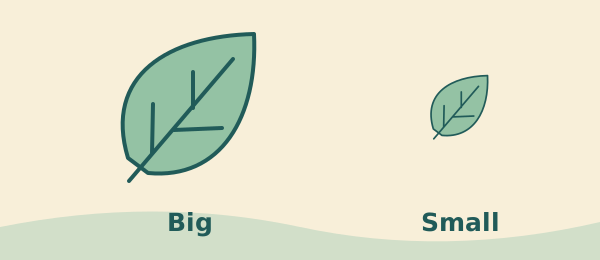 Levels 1–4
Big & Small
Learn what big and small mean, then compare garden pictures.
Play free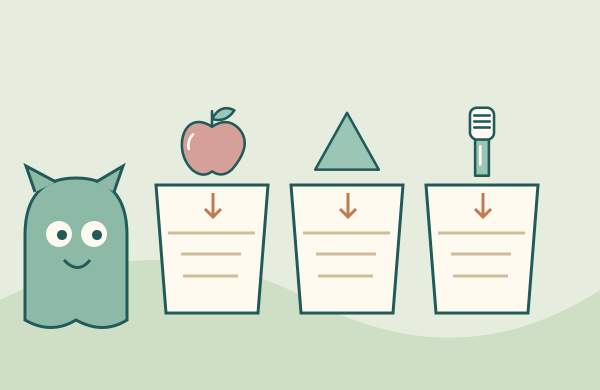 All levels
Momo’s Sorting Studio
Group shapes, everyday foods and care tools using clear properties or their named use.
Play free Levels 3–4
Pattern Parade
Spot what comes next in a pattern.
Play free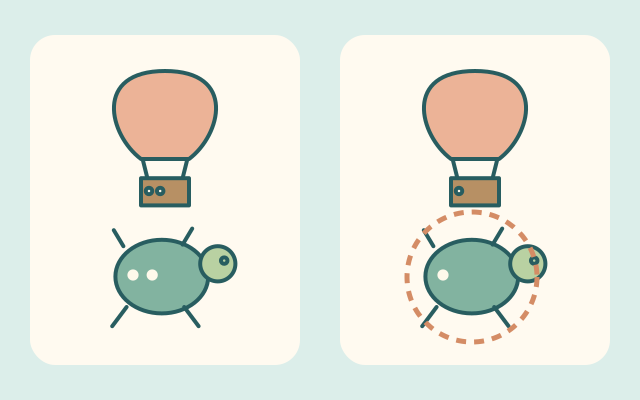 Levels 2, 4, 6, 8, 10
Momo’s Sky & Sea Spotters
Compare sky and ocean pictures to notice five missing or changed details.
Play free Levels 1–2
Garden Friends
Meet little friends from the garden.
Play free
Help your child get started
Make the first clue concrete
Name the shape, object or feature together. Begin with an obvious match before asking a child to remember a hidden picture or describe a difference.
Help with reading and movement
Read instructions aloud and use tap controls where offered. Choose a quiet mode when available, and help a child put a comparison into words without requiring an independent answer.
Try it at home
Find a matching pair of socks or compare two leaves. Ask what looks the same and what looks different before returning to a picture puzzle.
Try it in the classroom
Invite children to sort a small set of pictures together. Let them point, gesture or explain, and revisit the group rule when an item could fit more than one idea.
A few useful answers
Which preschool puzzle should we try first?
Shape Match offers a direct same-shape choice in the youngest band. Matching Cups adds remembering, while sorting and spotting differences invite closer comparison. Use the child’s response to decide the next step.
How do we choose a Level and start playing?
Open a game or Go to Worlds, then choose a Level using the shared profile controls if you have not chosen one yet. Levels 1–2 correspond to the age-two band, 3–4 to ages 3–4, 5–6 to ages 5–6, 7–8 to ages 7–8, and 9–10 to ages 9–10. The first Level in each pair offers a starter collection; the second offers a fuller collection. Age is guidance, and a discovery-page link does not change the profile.
Are the games free, and where is progress saved?
The activities are free to play without creating an online account. Profiles and supported activity progress stay in this browser on this device. They do not sync between devices. Private browsing, blocked storage or clearing browser data can prevent saving or remove local progress.